Eurosonics — Your solution for plastic welding

Ultrasonic welding — our complete range.

20, 30, 35 and 40 kHz presses, hand-held devices and integration components: we cover the full chain, from lab bench to automated production line.
01Ultrasonic

Ultrasonic welding press 20 / 30 / 35 / 40 kHz

One range, four frequencies: 20 kHz for large parts and filled materials, 30 kHz for medium parts, 35 kHz for precision technical parts and 40 kHz for sensitive micro-assemblies.

  • 20 kHz — up to 4,000 W, stroke up to 150 mm (automotive, appliances)
  • 30 kHz — up to 2,000 W, compact footprint, easy robot integration
  • 35 kHz — up to 1,200 W, very short cycles, micrometric repeatability
  • 40 kHz — up to 800 W, ultra-fine amplitude (medical, electronics, films & textiles)
  • Integrated digital generator and process traceability (curves, energy, time)
02Ultrasonic

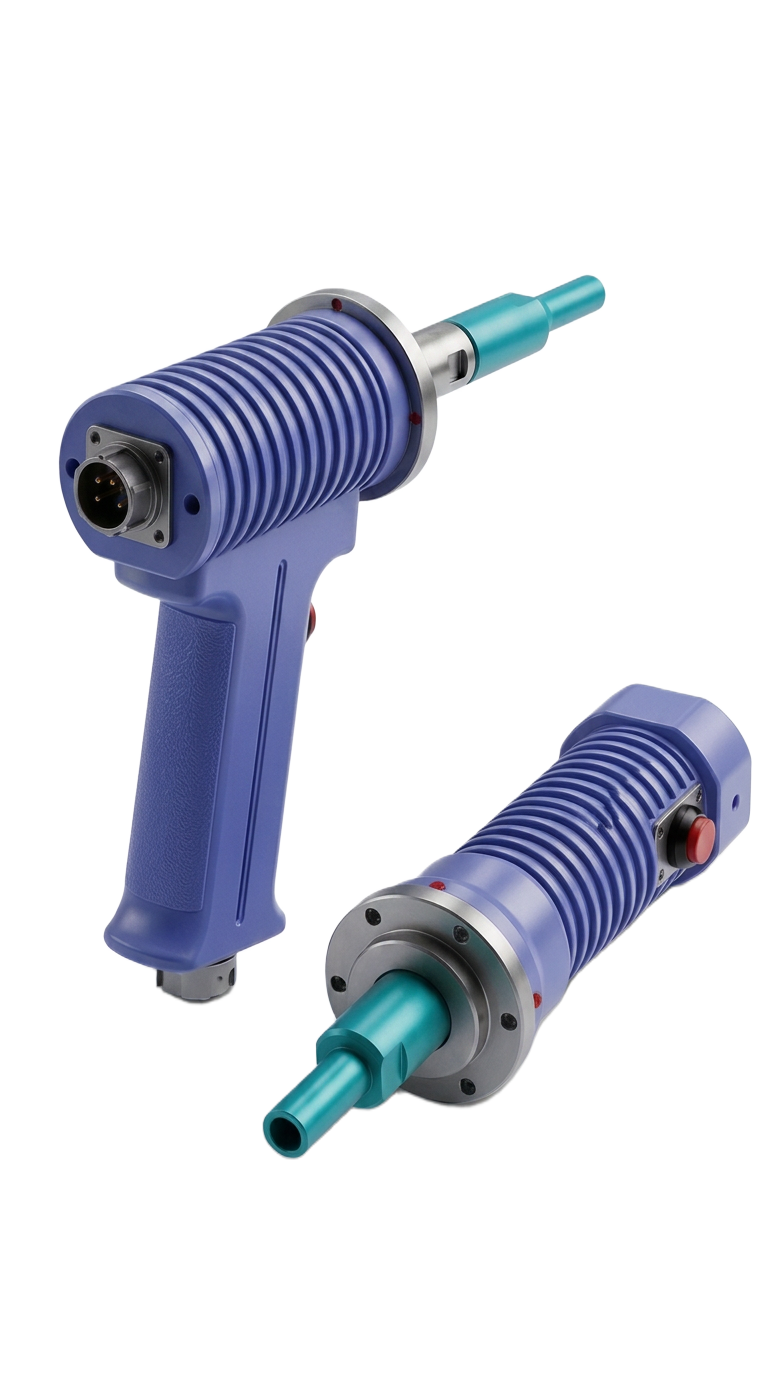
Hand-held ultrasonic welding devices 30kHz / 35kHz

Show details

Portable ultrasonic guns for rework, touch-ups and spot welding on assembled or oversized parts.

  • Ergonomic form factor
  • External generator supply
  • Interchangeable horns
  • Ideal for aftersales and rework
Hand-held ultrasonic welding devices 30kHz / 35kHz
03Ultrasonic

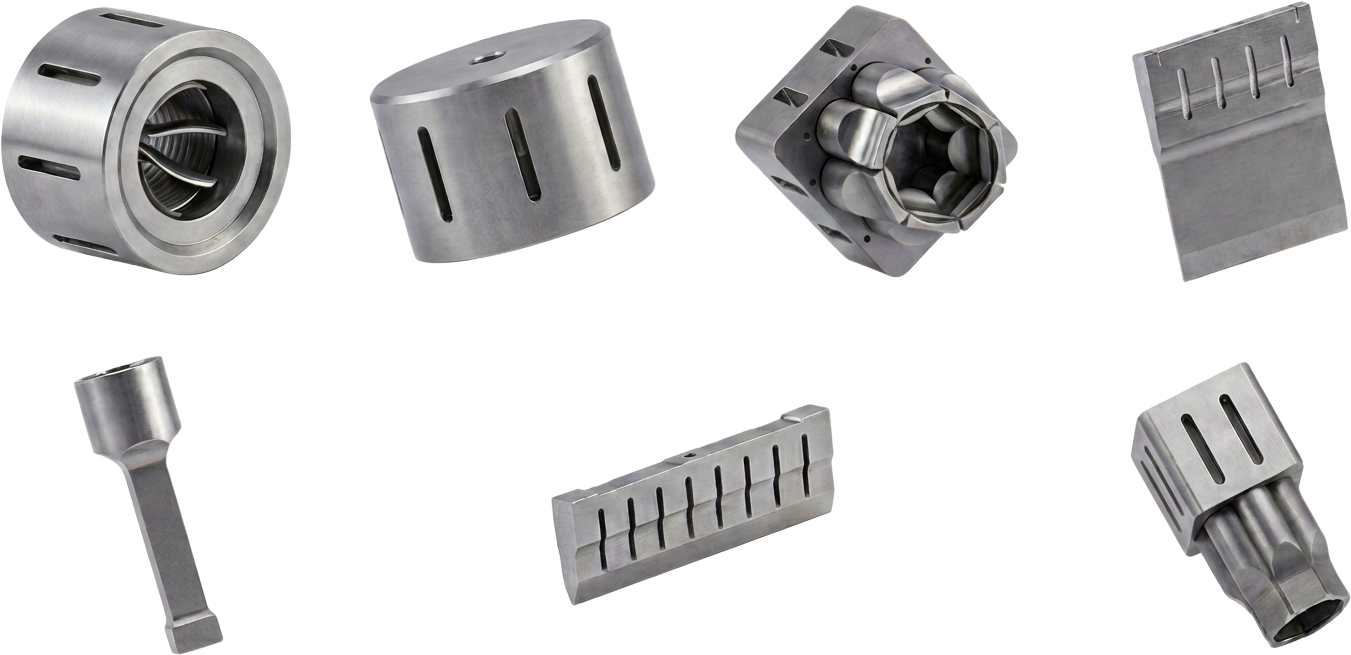
Horns and ultrasonic components

Show details

Generators, converters, boosters and horns for integration into your production lines or special machines.

  • 20 / 30 / 35 / 40 kHz generators
  • Titanium / aluminium converters & boosters
  • Custom horns (design & FEM)
  • PLC / fieldbus interfaces
Horns and ultrasonic components
Diagram — the acoustic stack
GeneratorConverterBoosterHornPlastic partsAnvil / nestForce

The generator converts 50 Hz mains power into high frequency. The converter turns that signal into mechanical vibration, amplified by the booster and transmitted by the horn. Under pressure, molecular friction melts the interface of both parts in tenths of a second — no glue, no screws, no added material.

Choosing a frequency

The higher the frequency, the finer the part.

Comparison of 20, 30, 35 and 40 kHz ultrasonic welding frequencies
FrequencyPowerTarget partsSectors
20 kHz≤ 4,000 WLarge parts, filled materialsAutomotive, appliances
30 kHz≤ 2,000 WMedium, vibration-sensitive partsConnectors, white goods
35 kHz≤ 1,200 WPrecision technical partsMedical, electronics
40 kHz≤ 800 WMicro-assemblies, thin materialsFilms, technical textiles

Technical animation

Fifteen joint designs, animated

Energy director, shear joint, tongue and groove, staking, insertion, film sealing: each tile replays the full welding cycle and shows the recommended dimensions.

Full screen

Frequently asked questions

Which frequency should I choose for my part?

20 kHz for large parts and filled materials, 30 kHz for medium parts, 35 kHz for precision technical parts and 40 kHz for micro-assemblies and thin materials. When in doubt, we confirm the choice with a trial on your actual parts.

Which plastics can be ultrasonically welded?

All thermoplastics: ABS, PC, PMMA, PA, PP, PE, POM, PBT, plus blends and glass-fibre filled grades. Welding two different materials is possible when their melting temperatures are compatible.

Does the joint design matter?

It is the decisive factor. An energy director (triangular, shear, tongue-and-groove) concentrates vibration at the interface and secures both tightness and repeatability. Our animation above shows 15 proven joint designs.

What cycle time and productivity can I expect?

Weld time is measured in tenths of a second (typically 0.2 to 1.5 s), giving a full cycle of 1 to 3 seconds depending on handling. Presses integrate into manual stations, rotary tables or robotic cells.

Need a specific configuration for your part?

Send us your drawing or your parts: we validate the frequency, joint design and cycle time in our test lab (France, Tunisia, Morocco).

Request a free trial
Our locations

An international presence, close to your production sites.

Click a marker to see details